Trees & flora
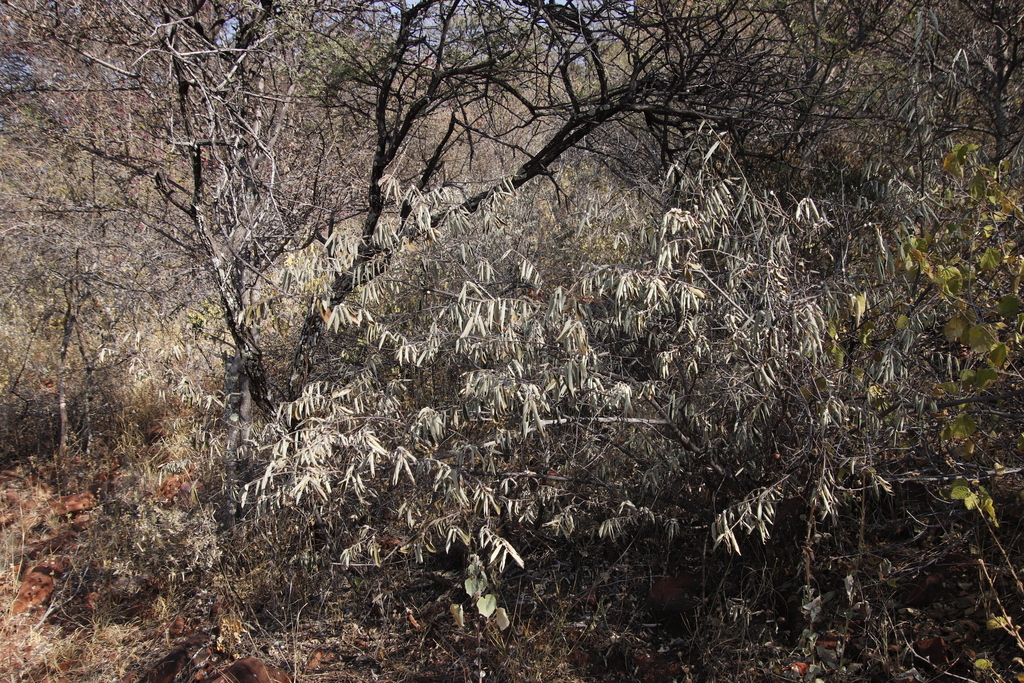
Grewia bicolor, called bastard brandy bush, false brandy bush, two-coloured grewia, white-leaved grewia, white-leaved raisin, white raisin and donkey berry (a name it shares with Grewia flavescens), is a species of flowering plant in the family Malvaceae, native to sub-Saharan Africa, Yemen, Oman, and the Indian subcontinent.
Most records Nov to Dec
When White Raisin sightings peak, from open records. Outside these months it is seen less often, not never.
Curve from 555 national iNaturalist observations, not from one property. Single-month spikes are discarded as upload artefacts, and below 50 records we show no curve at all.
Limpopo and beyond
Provinces where White Raisin is most recorded. Tap one to find places to stay.
555 records, iNaturalist
10+ resultaten in Zuid-Afrika
Een reis plannen
White Raisin: door gastheren waargenomen in of bij Kruger National Park.
Soort
Grewia bicolor
Waarnemingen
555
iNaturalist-waarnemingen
Elke boeking op Spekboom steunt natuurbehoud.
Een waarneming betekent dat een gastheer de White Raisin op of bij het terrein heeft gezien. Een waarneming is nooit gegarandeerd.
Hosts on Spekboom have recorded the White Raisin at stays in or beside Kruger National Park. A record means a host has seen it on the property or nearby, which makes these the places to base yourself; it is never a guarantee of a sighting on any given day.
The White Raisin is most recorded in Limpopo (60% of records), Mpumalanga (28% of records), North West (6% of records), based on 555 iNaturalist observations. 13 places to stay on Spekboom in South Africa have recorded the White Raisin on site or nearby.
Sightings of the White Raisin peak from Nov to Dec, based on 555 iNaturalist records. You may still see it outside those months, sightings are just less frequent.
Grewia bicolor, called bastard brandy bush, false brandy bush, two-coloured grewia, white-leaved grewia, white-leaved raisin, white raisin and donkey berry (a name it shares with Grewia flavescens), is a species of flowering plant in the family Malvaceae, native to sub-Saharan Africa, Yemen, Oman, and the Indian subcontinent.